Showing posts with label Qur’an. Show all posts

Tuesday, 29 May 2018

Unraveling wonders in the Holy Qur’an

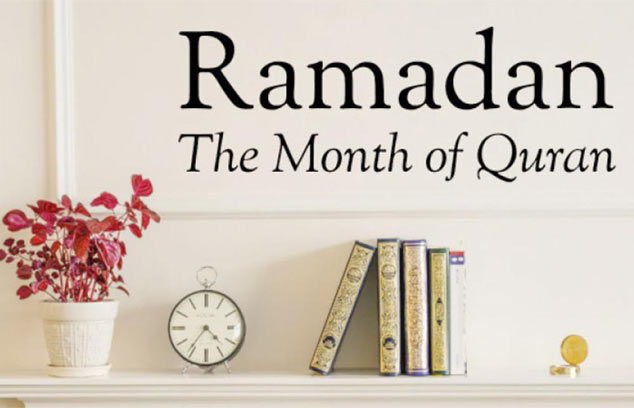
Ramadan is the month of fasting, and it is also the month of Qur’an. It was during Ramadan that the first verses of the Qur’an were revealed to Prophet Muhammad (peace be upon him).
 Unraveling wonders in the Holy Qur’an


{The month of Ramadan [is that] in which was revealed the Qur’an, a guidance for the people and clear proofs of guidance and criterion.} (Chapter 2, verse 185 of the Holy Qu’ran)

Eager to gain the rewards in this month, many of us rush to read the entire Qur’an and we compete to complete even more than once before the month is over. While dedicating your time to reading the Qur’an is no doubt praiseworthy, I call upon my Muslim brothers and sisters to take a slightly different approach this Ramadan.

Rather than hastily reading through, why not pick a certain chapter or chapters of the Qur’an and delve deeply into the meanings of the verses, the lessons to be learned, the context in which they were revealed during the life of Prophet Muhammad (peace be upon him), studying the history, and also the implications the verses carry for our lives today? Rather than simply, we need to work hard to understand the Qur’an. Alternately, you can pick a certain topic and research it in-depth in the Holy Qur’an, for example, stories of the prophets, or the description of Paradise. Another recommendation is to use the Qur’an as a blueprint to develop your character. For example, study the verses which speak about patience or piety or the characteristics of a believer in general.

For a class which I offer the girls in our community, we picked Surah Al-Israa, the Chapter of the Night Journey, to explore the meanings of the verses, and we have learned a lot and greatly enjoyed the classes.

The Qur’an, the word of God, is a book of guidance for humanity. Students of the Qur’an never cease to be amazed by the wonders found in it. Researchers have studied the numbers of times that certain words are repeated in the Qur’an which causes us to appreciate the Qur’an even more.

The word ‘day’ (yawm) is repeated in its singular form 365 times, while the plural and dual forms, ‘days’ (ayyam and yawmayn) together are repeated 30 times. The number of repetitions of the word ‘month’ (Shahar) is 12.

The words ‘Paradise’ and ‘Hellfire’ are each repeated the same number of times, 77 times. The significance I draw from this is that the believer must live his/her life in a balance between fear of Allah and fear of the punishment, but also hope in Allah’s mercy and forgiveness, and the yearning to enter Paradise.

The words, ‘world’ (dunya) and ‘Hereafter’ (akhira) are repeated an equal number of times, 115 times. Although there may not be great importance in the numbers, we should ponder on the importance of mentioning this world and the next world an equal amount of times in the Qur’an.

The ultimate priority in a believer’s life is worshiping Allah, but that does not mean we can neglect our duties and responsibilities of building and protecting this Earth. What comes to mind is the saying of Prophet Muhammad (peace be upon him), “If the Resurrection were established upon one of you while he has in his hand a sapling, then let him plant it.” (Musnad Ahmad)

At the same time, we must not become so immersed in this world’s pleasures and problems that we neglect our worship. Neither work nor entertainment should blind us from dedicating enough time to the service of others and worshiping Allah.

Prophet Muhammad (peace be upon him) warned us of becoming entranced by worldly affairs; he said, “By Allah, it is not poverty that I fear for you, but I fear that this world will be spread out in front of you as it was spread out in front of those before you, and then you will vie for it as they vied for it, and it will destroy you as it destroyed them” (Riyad as-Salihin by Imam Nawawi)

Another finding in the Qur’an I marveled over is the reference to the land and sea. The word ‘land’ appears 13 times in the Qur’an and the word ‘sea’ 32 times, giving a total of 45 references. The number of total references to land and sea, 45, divided by the number of references to the sea in the Qur’an, 32, and multiplied by 100 is 71.1%. Extraordinarily, these figures represent the exact proportions of land and sea on the Earth.

source: saudigazette.com.sa

Friday, 26 January 2018

No time for learning Qur’an

No time for learning Qur’an


No time for learning Qur’an


I don’t have time. I wish there was more than 24 hours in a day. We all complain that there is no time. There is no time to exercise, no time for learning Qur’an, no time to take a carefree walk, no time to sit down and read the Holy Qur’an with deep thought and reflection, and absolutely no time to practice and memorize verses of the Qur’an.

The sharp truth is: there is time. You do have time.

Where is all the time going?

We are blind to our time-eating, time-wasting habits. We underestimate how much time we waste on idle, unproductive, useless habits.

What are the things that are stealing our time away from us after we get back from work or school?

Work or school or college takes up a big chunk of our day. For most people that is 8 to 9 hours. That leaves you with a remaining 16 to 15 hours to accomplish your personal and spiritual goals, to have fun, rest, spend time with family, socialize, shop, and of course sleep.

Here are some places where you can find that lost time that we are all looking for.

Sleep

Research has shown that by the time you reach 70 years old, you would have slept for around 8,477 days. That is 23 years of your life asleep. In no way, do I advise you to go without sleep or even sharply reduce your sleeping hours.

We all need sleep, as Allah has said in the Qur’an, “And made your sleep [a means for] rest.” (chapter 78, verse 9)

The key here is to not oversleep, especially on weekends, holidays, and vacations. Also, a healthy adult needs no more than 7 to 8 hours of sleep a day. If you are sleeping around 10 to 12 hours a day, that is basically just throwing your time away.

The trick is to calculate how you can add in some time for Qur’an. For example, you can stay in bed for an extra half an hour than normal, to read some Qur’an before sleeping. Or, you can wake up half an hour earlier than normal and before rushing off to work, you can read Qur’an for half an hour. That simple change gives you 3 hours and a half each week dedicated to reading the Qur’an.

Another easy way to read Qur’an is to read just four pages after each of the five obligatory prayers. At the end of the day, you will be surprised that you have read an entire section or juz’ of the Qur’an, which is about 20 pages.

Mobile Phones and

Social Media Apps

According to research, in the year 2017, the average person spent 2 hours and 51 minutes each day on a mobile phone. That’s almost 3 hours every day, 21 hours every week, 84 hours every month. Imagine what could have been accomplished in this time!

Be aware of the time robbers. When you have to check an important message on your phone from a co-worker, check the message, reply to it, and put it down.

Often times, we reply to the important message but then waste half an hour going through the different posts on various social media apps, looking at photos, or reading posts of our friends and celebrities.

Set aside no more than 30 minutes in the evening to follow the different social media feeds, otherwise, resist the temptation to use those apps at all. Use your mobile phone positively, to help you accomplish your Qur’an learning goals. There are plenty of good apps, such as Quran Companion, Memorize, and iQuran Lite.

In the car

In your lifetime by the time you are 70 years old, you will have spent 1,099 days in a car. That is three years of your life sitting in a car, probably on your mobile phone. For school and college students who don’t drive yet, and for women in KSA, and others who may ride with someone else or take a bus to work, being in the car is the golden time to memorize Qur’an. Some people have memorized the entire Qur’an, only in car rides. Always carry with you a small Qur’an when you are a passenger in the car, to study and revise the Qur’an.

Media- TV- YouTube

Research has shown that an average American watches television or YouTube or other forms of media for 5 hours every day. The numbers are not much better for Saudi Arabia, as Saudis are the world’s top per capita users of YouTube. According to a report in CBC News, Saudis account for an astounding 190 million YouTube views each day, that’s a rough average of more than six views per citizen per day. Often times, viewers are seeking entertainment, which again is a sheer waste of time.

Advice when it comes to media:

• Do not watch idle TV shows and the popular soap operas.

• Do not gorge on YouTube, find a balance.

• Never subscribe to Netflix.

• Do not watch junk, and always put a time limit.

• If you do want to unwind and watch something on YouTube, make smart choices. Watch videos that help you learn a new skill, or tips that can build your self-confidence. Watch something that will help you grow, intellectually or spiritually.

There are excellent YouTube programs that are enjoyable and can help you understand and appreciate the Qur’an better. The programs Amazed by the Qur’an and also Qur’an Weekly, both by Nouman Ali Khan, shed light on the meanings of the verses of the Qur’an and life lessons we can learn from the verses. As for beautiful recitations of the Qur’an, you can click on Awesome Qur’an and listen to the chapter of the Qur’an that you are memorizing.

We cannot continue using the excuse “I don’t have time” because we do have time; it is just a matter of prioritizing what we want to do with that time.

When the Muslims were great, they were great because they were connected to the Book of Allah and because they worked diligently to learn the religion and also sciences of the world. They were spiritual leaders and also leaders in education, medicine, mathematics, economics, and other fields.

Look to the example the companion, Abdullah ibn Mubarak, who learned from 4,000 teachers during his lifetime and he had to go to them to study. He said, “I spent thirty years learning manners, and I spent twenty years learning knowledge.”

The people before us were devoted to the Qur’an. Some would read the entire Qur’an every month, others in ten days, others every week. They would read Qur’an in good times and in bad times and even when they were busy.

source: saudigazette.com.sa

Monday, 6 June 2016

Qur’an and Hadith on fasting

Qur’an and Hadith on fasting

Qur’an and Hadith on fasting

O you, who believe. Fasting is prescribed for you as it was prescribed for those before you, that you may become Al-Muttaqun (the pious). (Fasting) for a fixed number of days, but if any of you is ill or on a journey, the same number (should be made up) from other days. And as for those who can fast with difficulty, (i.e. an old man, etc.), they have (a choice either to fast or) to feed a poor person (for every day). But whoever does good of his own accord, it is better for him. And that you fast, it is better for you if only you know.” (Qur’an, 2:183-84)

“The month of Ramadan in which was revealed the Qur’an, a guidance for mankind and clear proofs for the guidance and the criterion (between right and wrong). So whoever of you sights (the crescent on the first night of) the month (of Ramadan), he must fast that month, and whoever is ill or on a journey, the same number (of days which one did not fast must be made up) from other days.

Allah intends for you ease, and He does not want to make things difficult for you. (He wants that you) must complete the same number (of days), and that you must magnify Allah for having guided you so that you may be grateful to Him” (Qur’an, 2:185).

“It is made lawful for you to have sexual relations with your wives on the night of the fasts. They are garments for you and you are the same for them. Allah knows that you used to deceive yourselves, so He turned to you and forgave you. So now have sexual relations with them and seek that which Allah has ordained for you, and eat and drink until the white thread (light) of dawn appears to you distinct from the black thread (darkness of night), then complete your fast till the nightfall. And do not have sexual relations with them (your wives) while you are in Itikaf in the mosques. These are the limits (set) by Allah, so approach them not. Thus does Allah make clear His signs to mankind that they may become Al Muttaqun (the pious).” (Qur’an, 2:187)

“Verily! We have sent it (this Qur’an) down in the night of Al-Qadr. And what will make you know what the night of Al-Qadr is? The night of Al-Qadr is better than a thousand months. Therein descend the angels and the Ruh (Gabriel) by Allah’s Permission with all Decrees, Peace! Until the appearance of dawn.” (Qur’an, 97:1-5)

Hadiths on fasting

Abu Huraira related that the Prophet (peace and blessings be upon him) said: “Whoever fasts during Ramadan with faith and seeking his reward from Allah will have his past sins forgiven. Whoever prays during the nights in Ramadan with faith and seeking his reward from Allah will have his past sins forgiven. And he who passes Lailat Al-Qadr in prayer with faith and seeking his reward from Allah will have his past sins forgiven.” (Bukhari, Muslim)

Abu Huraira related that the Prophet (peace be upon him) said: “If anyone omits his fast even for one day in Ramadan without a concession or without being ill, then if he were to fast for the rest of his life he could not make up for it.” (Bukhari)

Abu Huraira related that the Prophet (peace be upon him) said: Allah the Majestic and Exalted said: “Every deed of man will receive ten to 700 times reward, except Siyam (fasting), for it is for Me and I shall reward it (as I like). There are two occasions of joy for one who fasts: one when he breaks the fast and the other when he will meet his Lord” (Muslim).

Abu Huraira related that the Prophet (peace be upom him) said: Many people who fast get nothing from their fast except hunger and thirst, and many people who pray at night get nothing from it except wakefulness (Darimi).

When to start fasting

Ibn Umar related that the Prophet said: “Do not start fasting unless you see the new moon, and do not end fasting until you see it. If the weather is cloudy then calculate when it should appear.” (Bukhari, Muslim)

Suhoor (pre-dawn meal)

Anas related that the Prophet said: “Take the suhoor meal, for there is blessing in it.” (Bukhari, Muslim)

Breaking your fast

Salman ibn Amir Dhabi related that the Prophet said: “Break your fast with dates, or else with water, for it is pure.” (Abu Dawud, Tirmidhi)

During journey

Aisha related that the Prophet (peace be upon him) was asked whether one should fast when on a journey, and he replied: “Fast if you like, or postpone it if you like.” (Bukhari, Muslim)

Behavior while fasting

Abu Huraira related that the Prophet (peace be upon him) said: “If a person does not avoid false talk and false conduct during Siyam, then Allah does not care if he abstains from food and drink.” (Bukhari, Muslim)

Forgetfully eating or drinking while fasting

Abu Huraira related that the Prophet (peace be upon him) said: “If anyone forgets that he is fasting and eats or drinks he should complete his Siyam, for it is Allah who has fed him and given him drink.” (Bukhari, Muslim)

Providing for those who are breaking the fast

Zaid ibn Khalid Johni related that the Prophet (peace be upon him) said: “He who provides for the breaking of the Siyam of another person earns the same merit as the one who was observing Siyam without diminishing in any way the reward of the latter.” (Tirmidhi)

Lailat Al-Qadr

Aisha related that the Prophet (peace be upon him) said: “Look for Lailat Al-Qadr on an odd-numbered night during the last 10 nights of Ramadan.” (Bukhari).
Anas ibn Malik related that the Prophet (peace be upon him) said: “When Lailat Al-Qadr comes, Gabriel descends with a company of angels (may Allah bless them all) who ask for blessings on everyone who is remembering Allah, whether they are sitting or standing.” (Baihaqi)
Source: arabnews.com

Friday, 8 April 2016

Why Qur’an is a divine book

Why Qur’an is a divine book

Why Qur’an is a divine book


IF one assumes that the Qur’an is the product of a man’s mind, then one would expect it to reflect some of what was going on in the mind of the man who “composed” it.

In fact, certain encyclopedias and various books claim that the Qur’an was the product of hallucinations that Muhammad (may the mercy and blessings of God be upon him) underwent.

If these claims are true, then evidence of this would be apparent in the Qur’an. Is there such evidence? In order to determine whether or not there is, one must first identify what things would have been going on in his mind at that time and then search for these thoughts and reflections in the Qur’an.

It is common knowledge that Prophet Muhammad (may the mercy and blessings of God be upon him) had a very difficult life.

All of his daughters died before him except one, and he had a wife of several years who was very dear and important to him, who not only proceeded him in death but died at a very critical period of his life.

As a matter of fact, she was quite a woman because when the first revelation came to him, he ran home to her, afraid. Certainly, even today one would have a hard time trying to find an Arab who would tell you, “I was so afraid that I ran home to my wife.” They just aren’t that way.

Yet Muhammad, may the mercy and blessings of God be upon him, felt comfortable enough with his wife to be able to do that. That’s how influential and strong woman she was. Although these examples are only a few of the subjects that would have been on Prophet Muhammad’s mind, they are sufficient in intensity to prove my point.

The Qur’an does not mention any of these things — not the death of his children, not the death of his beloved companion and wife, not his fear of the initial revelations, which he so beautifully shared with his wife — nothing; yet these topics must have hurt him, bothered him, and caused him pain and grief during periods of his life.

Indeed, if the Qur’an was a product of his psychological reflections, then these subjects, as well as others, would be prevalent or at least mentioned throughout.

Scientific approach
 
A truly scientific approach to the Qur’an is possible because the Qur’an offers something that is not offered by other religious scriptures, in particular, and other religions, in general. It is what scientists demand. Today there are many people who have ideas and theories about how the universe works. These people are all over the place, but the scientific community does not even bother to listen to them. This is because within the last century the scientific community has demanded a test of falsification.

They say, “If you have theory, do not bother us with it unless you bring with that theory a way for us to prove whether you are wrong or not.”

Such a test was exactly why the scientific community listened to Einstein toward the beginning of the century.

He came with a new theory and said, “I believe the universe works like this; and here are three ways to prove whether I am wrong!” So the scientific community subjected his theory to the tests, and within six years it passed all three.

Of course, this does not prove that he was great, but it proves that he deserved to be listened to because he said, “This is my idea; and if you want to try to prove me wrong, do this or try that.”

This is exactly what the Qur’an has — falsification tests. Some are old (in that they have already been proven true), and some still exist today. Basically it states, “If this book is not what it claims to be, then all you have to do is this or this or this to prove that it is false.” Of course, in 1400 years no one has been able to do “This or this or this,” and thus it is still considered true and authentic.

Falsification test
 
I suggest to you that the next time you get into dispute with someone about Islam and he claims that he has the truth and that you are in darkness, you leave all other arguments at first and make this suggestion.

Ask him, “Is there any falsification test in your religion? Is there anything in your religion that would prove you are wrong if I could prove to you that it exists – anything?”

Well, I can promise right now that people will not have anything – no test, no proof, nothing! This is because they do not carry around the idea that they should not only present what they believe but should also offer others a chance to prove they’re wrong. However, Islam does that.

A perfect example of how Islam provides man with a chance to verify its authenticity and “prove it wrong” occurs in the 4th chapter. And quite honestly, I was very surprised when I first discovered this challenge. It states: “Do they not consider the Qur’an? Had it been from any other than Allah, they would surely have found therein much discrepancy.” (Qur’an, 4:82)

This is a clear challenge to a non-Muslim. Basically, it invites him to find a mistake.

As a matter of fact, the seriousness and difficulty of the challenge aside, the actual presentation of such a challenge in the first place is not even in human nature and is inconsistent with man’s personality.

One doesn’t take an exam in school and after finishing the exam, write a note to the instructor at the end saying, “This exam is perfect. There are no mistakes in it. Find one if you can!” One just doesn’t do that. The teacher would not sleep until he found a mistake! And yet this is the way the Qur’an approaches people.

Umrah packages 2016         |        hajj packages 2016          |        Ramadan umrah packages 

December umrah packages 2016         |         5 star Makkah & Madinah Hotels

 Article by: arabnews.com

Wednesday, 6 April 2016

Amazing Qur’an — a sea of treasure

Amazing Qur’an — a sea of treasure

Amazing Qur’an — a sea of treasure

One thing which surprises non-Muslims who are examining the book very closely is that the Qur’an does not appear to them to be what they expected.

What they assume is that they have an old book, which came 14 centuries ago from the Arabian desert; and they expect that the book should look something like that — an old book from the desert. And then they find out that it does not resemble what they expected at all.

Additionally, one of the first things that some people assume is that because it is an old book which comes from the desert, it should talk about the desert. Well the Qur’an does talk about the desert — some of its imagery describes the desert; but it also talks about the sea — what it’s like to be in a storm on the sea.

Merchant marine

Some years ago, the story came to us in Toronto about a man who was in the merchant marine and made his living on the sea. A Muslim gave him a translation of the Qur’an to read. The merchant marine knew nothing about the history of Islam but was interested in reading the Qur’an.

When he finished reading it, he brought it back to the Muslim and asked, “Who was this Muhammad (peace be upon him), was he a sailor?”

He was impressed at how accurately the Qur’an describes a storm on a sea. When he was told, “No as a matter of fact, Muhammad lived in the desert,” that was enough for him. He embraced Islam on the spot.

He was so impressed with the Qur’an’s description because he had been in a storm on the sea, and he knew that whoever had written that description had also been in a storm on the sea.

The verses in reference was: “Or (they are) like darknesses within an unfathomable sea which is covered by waves, upon which are waves, over which are clouds — darknesses, some of them upon others. When one puts out his hand (therein), he can hardly see it. And he to whom Allah has not granted light — for him there is no light. (Qur’an, 24:40)

The description of “…a wave, over it a wave, over it clouds” was not what someone imagining a storm on a sea to be like would have written; rather, it was written by someone who knew what a storm on the sea was like.

This is one example of how the Qur’an is not tied to certain place and time. Certainly, the scientific ideas expressed in it also do not seem to originate from the desert 14 centuries ago.

The smallest thing

Many centuries before the prophethood of Muhammad (peace be upon him), there was a well-known theory of atomism advanced by the Greek philosopher, Democritus. He and the people who came after him assumed that matter consists of tiny, indestructible, indivisible particles called atoms.

The Arabs too, used to deal in the same concept; in fact, the Arabic word dharrah commonly referred to the smallest particle known to man. Now, modern science has discovered that this smallest unit of matter (i.e., the atom, which has all of the same properties as its element) can be split into its component parts.

This is a new idea, a development of the last century. Yet, interestingly enough, this information had already been documented in the Qur’an, which states: “He (i.e., God) is aware of an atom’s weight in the heavens and on the earth and even anything smaller than that...” (Qur’an, 34:3)

Undoubtedly, 14 centuries ago that statement would have looked unusual, even to an Arab. For him, the atom was the smallest thing there was. Indeed, this is proof, that the Qur’an is not outdated.

Honey

Another example of what one might expect to find in an “old book” that touches upon the subject of health or medicine is outdated remedies or cures. The Prophet (may the mercy and blessings of God be upon him) gave advice about health and hygiene, which are found in his Prophetic Traditions, and until today this advice is compelling and proven in the field of medicine.

The Qur’an is a divine revelation and so are the prophetic traditions. The Qur’an sheds light on some remedies as do the prophetic traditions; unlike medical journals of today, there is no information that is outdated in the Qur’an and the prophetic traditions.

In summary, the Qur’an mentions one item that can be used as a treatment, which is not in dispute by anyone. It states that in honey there is healing. And certainly, I do not think that there is anyone who will argue with that!

Umrah packages 2016         |        hajj packages 2016          |        Ramadan umrah packages 

December umrah packages 2016         |         5 star Makkah & Madinah Hotels

 Article by: www.arabnews.com